
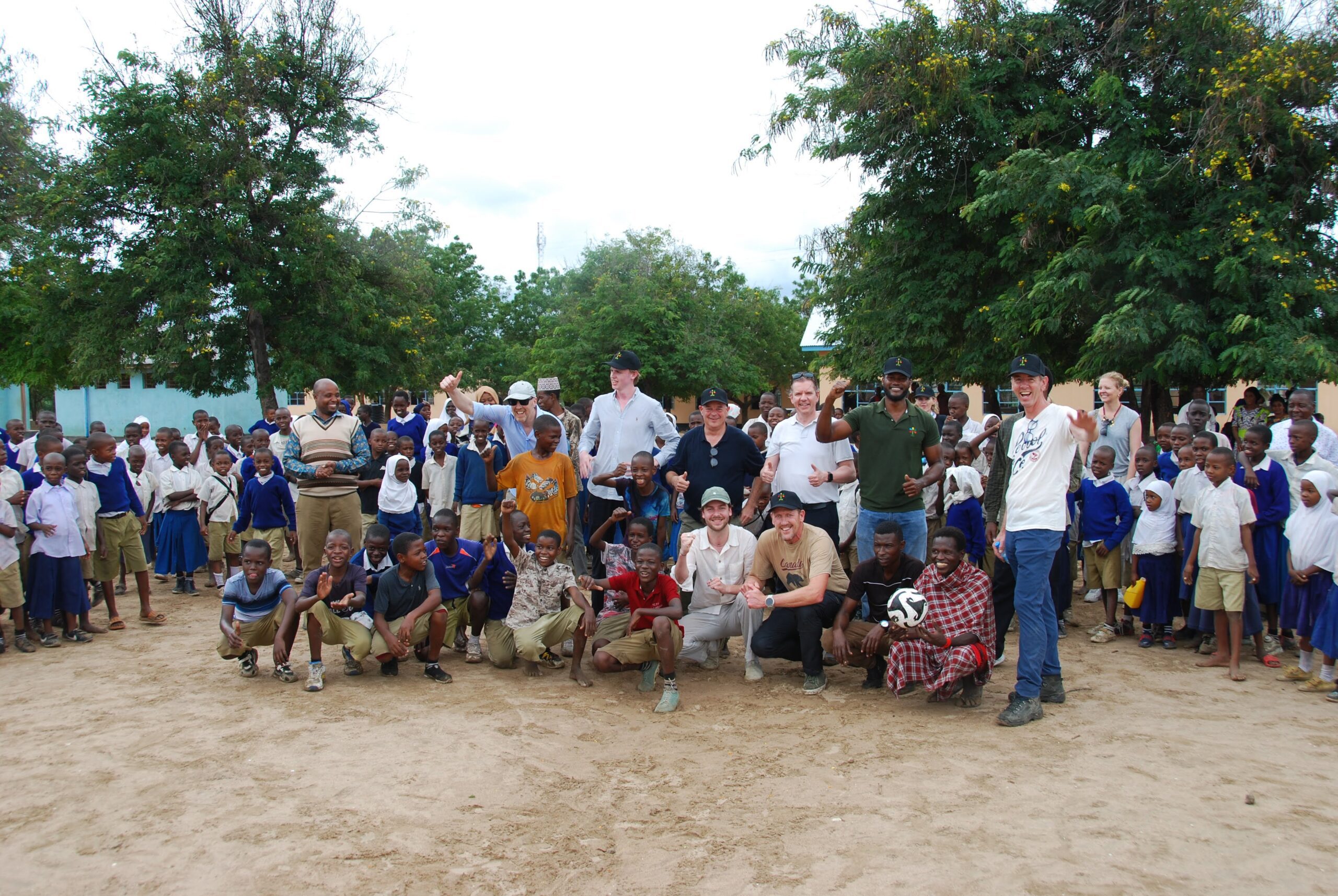
At the end of May, together with a group of eleven engaged investors and two colleagues from Net4kids, we flew to Kilimanjaro Airport for an unforgettable project trip to Tanzania. The goal? To show our investors firsthand how their support is making a difference. We spent two nights in Arusha, then four nights at the foot of Mount Kilimanjaro in Lower Moshi, and ended the trip with one last night in Arusha.
During this seven-day trip, the focus was primarily on visiting projects. In addition, we met with local sustainable entrepreneurs and businesses, and witnessed how local-level collaboration contributes to more opportunities and structural change in the region.
Why a project trip?
At Net4kids, we believe that truly experiencing a project—seeing it, feeling it, and being a part of it—has a far greater impact than reports or figures ever could. This trip confirmed that once again. You see firsthand how hard people are working to improve their communities, despite enormous challenges like drought, poverty, and limited infrastructure.
Our local partner FTK is working on the self-reliance of communities within a five-year timeframe. Each village has its own plan of action, as the challenges differ everywhere. For instance, we visited the villages of Mawala, Mtakuja, Kiruani, Mkalama, the Safe Water Project, the TPC hospital, the Mama Bus, and the alumni of the scholarship program.
Kiruani Village: successes and new challenges
Kiruani, now in its fifth year of the program, tells a remarkable story. When FTK started, there were barely any facilities. Now there is a primary and secondary school, single mothers are supported with small businesses (like farming and tailoring), and a major issue with safe drinking water has been addressed. The water contained extremely high fluoride levels, which severely affected villagers' teeth and bones, leading to low life expectancy. Thanks to new boreholes and filters (our Safe Water Project), this issue has been largely resolved.
Still, challenges remain. As FTK program manager Lazaro explains:
“Kiruani has achieved a great deal, such as school renovations, support for single mothers, tree-planting competitions, and the Safe Water project. However, the community still needs help. For instance, the dispensary building (a medical clinic) is up to the walls, but the village is waiting for funds to complete it. Currently, pregnant women and emergency cases often have to travel 4 to 7 kilometers for care – and that is nearly impossible during the rainy season due to flooding. The fluoride issue also still requires a special bone-char filter system. Addressing these challenges means a great deal for the quality of life and resilience of the villagers.”
Different stages, different stories
The contrast between the villages was stark. In Mawala (year 4 of 5), we see a community that has already taken many steps towards self-sufficiency. Mtakuja, a large agricultural project, is even fully self-sufficient and ready for the future. FTK's approach – focused on self-sufficiency and sustainability – has a visible impact on the lives of thousands of people in Lower Moshi. What strides have been made there in the areas of healthcare, infrastructure, income generation, education, and sustainability.
Mkalama: the starting point
The last village we visited, Mkalama, is still at the very beginning of the program. Schools in poor condition, hardly any teachers for hundreds of children, no sanitation facilities, no access to water, and consequently no possibility to grow vegetables. A harrowing picture. But it motivates us all the more to work together with FTK and the community to build a future in which this village also becomes self-sufficient.
FTK’s approach is clear: the community must take the initiative themselves. They submit a plan, establish a village council, and own the project. Only when they show they are serious does FTK provide expertise and resources. This ensures that the project is sustainable and that facilities like schools and boreholes are properly maintained even after the program ends.
Climate challenges
Climate change makes the situation even more complicated. The weather is becoming more extreme, with heavier rainfall causing villages like Mawala and Kiruani to experience frequent flooding. This destroys crops and leads to food shortages, making the need for sustainable projects even greater.
The essence
What makes a trip like this so special? It’s the way we truly work alongside the villages. They build their own future, and Net4kids, together with FTK, stands next to them, offering that push in the right direction. It’s incredible to see how much drive and energy the villagers get from that extra bit of support. Thanks to the program, they can pick up their own projects and succeed. It no longer feels hopeless. They feel seen and supported, and they realize that they can improve their own future—and they grab that chance with both hands.
“The need is great. Children living on one meal a day. Women giving birth without medical care. Schools with dilapidated walls. And yet: so much has already been achieved. We see houses under construction, small businesses growing, water filters ensuring a healthier existence. What touches us most? The resilience of the people. Their warmth. And time and again those words: 'You are most welcome.'‘ – Marja den Boer, participant Tanzania trip 2025.
For our investors, a trip like this is more than just a behind-the-scenes glimpse. Everyone who joined us returned as an ambassador. The group’s energy, commitment, and warmth showed that we truly do this together. Everyone wants to continue building the future of these villages. “This stays with you, because you see with your own eyes how much impact you can make,” as Yvon Mullink aptly put it.
Thank you to all the investors, travelers, and partners who make these trips and projects possible. Your support and enthusiasm are indispensable as we take these steps together.
We invite you, as a reader, to learn more about our initiatives and to reach out if you would like to join us in tackling the challenges we’ve encountered along the way.


